Bulk Social Media Scheduling: A Comprehensive Guide to Saving Time and Maximizing Engagement
PostZio Team
TL;DR Summary
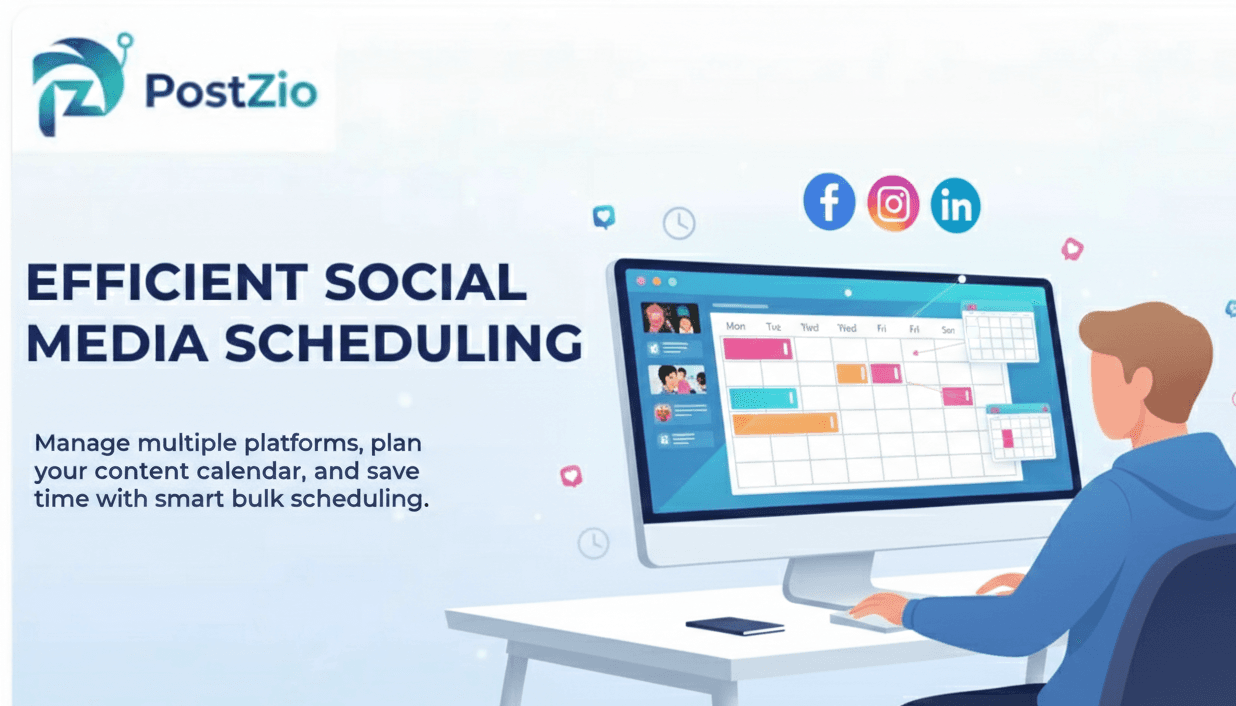
Bulk social media scheduling allows you to plan, create, and schedule posts for multiple platforms in advance, saving time and ensuring consistent content delivery. By utilizing the right tools and strategies like social media scheduling tools, businesses can optimize social media performance, improve audience engagement, and streamline workflows for more efficient marketing campaigns. This approach reduces daily tasks, prevents burnout through content batching, and leverages analytics for better results. In 2026, with over 5.42 billion social media users worldwide, adopting bulk methods is essential for staying competitive. Tools equipped with AI can automate up to 83% of content creation, freeing marketers to focus on strategy.
Introduction to Bulk Social Media Scheduling
Bulk social media scheduling refers to the process of preparing and automating multiple posts across various platforms ahead of time, often using specialized tools to handle uploads, timing, and distribution. This method is crucial for social media managers who juggle tight deadlines and multiple accounts, as it frees up hours that would otherwise be spent on manual posting. For instance, instead of logging in daily to each platform, managers can dedicate one session to crafting a week's or month's worth of content, ensuring a steady flow without interruptions. The importance lies in maintaining brand visibility during off-hours or holidays, which fosters trust and reliability with audiences. Moreover, in a fast-paced digital landscape where algorithms favor consistent activity, bulk social media scheduling helps avoid gaps that could diminish reach. According to recent data, consistent posting can boost engagement by 14%, highlighting why this practice is indispensable.
In today's environment, where social media usage continues to climb—projected at 5.42 billion users in 2026—bulk scheduling becomes a lifeline for brands aiming to cut through the noise. It not only streamlines operations but also aligns with audience behaviors, such as checking feeds during peak hours. Businesses leveraging bulk social media scheduling report higher efficiency, with time savings allowing for more creative endeavors. For example, a small e-commerce store might schedule promotional posts for an entire campaign in one go, ensuring timely delivery without constant oversight. This proactive approach mitigates risks like forgetting posts during busy seasons, ultimately leading to better ROI. As HubSpot notes in their social media trends report, brands that maintain regularity see up to 20% more interactions.
The rise of content batching has transformed how teams approach social media, allowing creators to produce high volumes of material in focused bursts rather than scattered efforts. This strategy not only saves time but also combats burnout by separating creative phases from administrative ones, enabling deeper focus on quality. Research shows that consistent posting can increase engagement by up to 14%, as audiences come to expect regular updates. By batching, managers can align content with broader marketing goals, such as seasonal campaigns, without the stress of last-minute scrambles. Tools like PostZio enhance this by offering AI social media scheduling suggestions, making batching more intuitive for 2026 trends. In practice, content creators might spend a full day ideating and producing visuals for educational series, then use bulk tools to distribute them over weeks. This method has been shown to reduce stress levels among marketers by 25%, according to surveys from Social Media Today.
Key benefits of bulk social media scheduling include enhanced efficiency, better audience interaction, and scalable growth for businesses of all sizes. Time savings alone can amount to 130 hours per year through automation, allowing teams to redirect efforts toward strategy and analysis. Consistency builds brand loyalty, as predictable posting schedules keep followers engaged and algorithms happy. Additionally, it supports data-driven decisions by providing clear performance insights post-scheduling, helping refine future content. For small businesses, this means competing with larger entities without proportional resources, while enterprises can coordinate global teams seamlessly with content calendar 2026 features. A case study from a retail brand revealed that implementing bulk scheduling led to a 30% increase in follower growth over six months, underscoring its impact on scalability. External resources like Forbes' guide on social media efficiency further emphasize how automation tools are revolutionizing marketing workflows.
Expanding on these advantages, bulk social media scheduling also promotes better work-life balance for teams. By front-loading content creation, managers avoid the constant pressure of daily updates, which can lead to higher job satisfaction rates. In 2026, with AI integration, 83% of marketers report creating more content efficiently, as per Hootsuite's statistics. This shift allows for experimentation with formats like short-form videos, which see 2.5 times more engagement. Real-world examples include influencers using bulk methods to maintain presence during travel, ensuring no drop in metrics.
Why Bulk Scheduling Works: Time Efficiency and Consistency
Bulk social media scheduling eliminates the need for daily posting tasks by allowing users to upload and automate content in advance, reducing repetitive logins and manual interventions. This streamlined approach means social media managers can focus on higher-value activities like audience interaction or campaign planning instead of routine uploads. For example, tools enable CSV imports for hundreds of posts at once, cutting preparation time dramatically. As a result, teams report significant productivity gains, with some saving hours weekly that accumulate into substantial annual efficiencies. This is particularly vital in busy periods when manual posting could lead to oversights or delays, especially with bulk posting trends. Studies from Buffer indicate that automated scheduling can increase post frequency by 50% without added effort.
Delving deeper, the time efficiency of bulk social media scheduling extends to content repurposing, where one asset is adapted for multiple platforms. This not only saves creation time but also maximizes reach. A marketing agency might create a video tutorial, then bulk schedule snippets for TikTok, Instagram Reels, and LinkedIn, achieving broader exposure. According to Metricool's 2026 report, brands using bulk methods see 60% more impressions due to optimized distribution. External insights from Buffer's resources recommend 3-5 posts per week on Instagram for peak efficiency.
Maintaining consistency with automated posts ensures a steady presence, even during vacations or peak workloads, which is essential for audience retention. Algorithms on platforms like Instagram and Facebook prioritize accounts with regular activity, boosting visibility and organic reach. By bulk social media scheduling, brands avoid content droughts that might cause followers to disengage, instead fostering habitual check-ins from users. Case in point: A theater chain used bulk social media scheduling to promote events consistently, resulting in a 20% increase in ticket sales through targeted, timed posts. This reliability also enhances brand perception, positioning the business as organized and responsive. Further, We Are Social's 2026 overview notes that users engage with 6.75 platforms monthly, making consistent cross-posting key.
To illustrate, consider a nonprofit using bulk scheduling to align posts with awareness months. By planning in advance, they maintain momentum, leading to higher donations. Statistics show that consistent brands enjoy 23% more loyalty, per Agorapulse's stats. This underscores how automation supports long-term engagement strategies.
Saving time through batching proves a proven strategy for efficient social media management, as it groups creative tasks into dedicated sessions. Managers can brainstorm, design, and caption multiple posts in one go, minimizing context-switching that drains energy. Statistics indicate that batched workflows reduce stress and improve content quality, leading to higher engagement rates. For instance, dedicating a day to batching can cover a month's schedule, freeing the rest of the week for analytics and refinements. Integrating tools like PostZio, which supports social media scheduling with intelligent scheduling, makes this even more accessible in 2026. Expanding on this, batching allows for thematic consistency, like weekly tips series, which can increase retention by 15%. Case studies from Power Digital's 2026 trends report highlight how UGC integration in batches boosts trust, with 70% of consumers seeking it before purchases.
Moreover, batching facilitates A/B testing on a larger scale, where variations are scheduled simultaneously for comparison. This data-driven refinement can optimize performance, as seen in e-commerce where timed promotions yield 25% more conversions.
Key Tools for Bulk Social Media Scheduling
Top bulk social media scheduling tools offer a range of features, pricing, and integrations tailored to different needs, making it easier to choose based on business scale. For example, Hootsuite excels in bulk uploads via CSV, supporting multiple platforms with robust analytics starting at $99 per user monthly. Buffer provides simple, beginner-friendly scheduling with free tiers for basic use, while Sprout Social focuses on enterprise-level collaboration from $149 monthly. MeetEdgar stands out for content recycling, priced at around $29 monthly, and Statusbrew offers advanced workflows for teams. PostZio, an AI-powered option, integrates seamlessly with over 20 platforms, including bulk calendar scheduling, starting with a free trial and plans from Starter to Agency levels – ideal for evergreen content in 2026. These tools are reviewed extensively in Sprout Social's insights, which compares them for 2026 needs.
Choosing the right tool depends on team or business size, with smaller operations favoring affordable, user-friendly options like Buffer or PostZio for their intuitive interfaces. Larger enterprises might prefer Hootsuite or Sprout Social for scalability and team features. Consider factors like platform support—PostZio covers Instagram, Facebook, LinkedIn, and more—and integration with tools like Canva. Pricing varies, so evaluate ROI through time saved; for instance, agencies benefit from unlimited seats in PostZio's Agency plan. Testing trials ensures the tool aligns with workflow needs for modern social media scheduling tools. According to Statusbrew's alternatives guide, tools like these offer better value for agencies.
Each tool optimizes the scheduling process for better efficiency by automating repetitive tasks and providing insights. Hootsuite's bulk composer handles up to 350 posts, while PostZio's AI Copilot generates captions and hashtags instantly, boosting creativity. Sprout Social's content calendar visualizes plans, reducing errors. These features collectively enhance consistency, with users reporting up to 50% improved asset reuse in campaigns. By centralizing management, tools like PostZio prevent app-switching, saving hours and improving overall marketing effectiveness. For deeper reviews, check Buffer's tool comparison.
To provide a clear overview, here's a comparison of top competitors including PostZio, based on 2026 reviews from sources like G2 and Capterra.
Comparison Table of Top Bulk Social Media Scheduling Tools
|
Tool |
Key Features |
Pricing (Starting) |
Best For |
Pros |
Cons |
|
PostZio |
AI Copilot for captions, bulk CSV upload, 20+ platforms, real-time analytics |
Free trial; $29/mo Starter |
Small businesses & agencies |
Affordable, AI-driven, easy collaboration |
Limited advanced reporting in base plan |
|
Hootsuite |
Bulk composer (350 posts), visual calendar, advanced analytics |
$99/mo per user |
Enterprises |
Scalable, strong integrations |
Expensive for small teams |
|
Buffer |
Simple scheduling, free tier, visual planner |
Free; $6/mo paid |
Beginners & creators |
User-friendly, affordable |
Basic features, no deep analytics |
|
Sprout Social |
Enterprise workflows, detailed dashboards, multi-platform |
$149/mo per user |
Large teams & agencies |
Comprehensive analytics, collaboration |
High cost, steep learning curve |
|
MeetEdgar |
Content recycling, automation, category-based scheduling |
$29/mo |
Content-focused brands |
Evergreen recycling, time-saving |
Limited platforms, no AI tools |
|
Statusbrew |
Advanced approvals, custom reports, team features |
$120/mo for 3 users |
Agencies & businesses |
Flexible pricing, modern automations |
Fewer integrations than Hootsuite |
This table draws from comparisons in Hootsuite's blog and UpliftGTM reviews. PostZio stands out for AI innovation, while Hootsuite leads in enterprise scalability.
Expanding on selection, evaluate tools based on specific needs like AI for content generation or analytics for ROI tracking. For instance, if recycling evergreen content is key, MeetEdgar excels, as noted in Post Planner's reviews.
Features of Popular Scheduling Tools
Comparing key features reveals strengths like AI-powered content suggestions, content calendars, and automated posting across tools. PostZio's AI Copilot offers instant caption generation and hashtag ideas, while Hootsuite provides bulk scheduling for hundreds of posts. Sprout Social excels in analytics dashboards, and Buffer emphasizes simplicity with visual planners. Content calendars in tools like PostZio allow drag-and-drop organization, previewing feeds for aesthetic consistency. Automated posting ensures timely delivery, with multi-platform support simplifying cross-channel efforts in AI social media scheduling trends. These features are crucial as 76% of consumers value responsive brands, per Power Digital.
Approval workflows and team collaboration tools streamline content management by enabling real-time reviews and edits. In enterprise settings, Sprout Social's workflows route posts for sign-offs, reducing bottlenecks. PostZio supports up to three team members in its Pro plan, with workspaces for separate brands. This fosters efficiency, as seen in agencies publishing thousands of posts annually without overlap. Collaboration is vital in 2026, with teams handling an average of 48-72 posts weekly for optimal engagement. Resources like Planable's alternatives highlight how these features compare.
Benefits of multi-platform support include managing multiple accounts effortlessly, ensuring consistent messaging. Tools like PostZio integrate with Instagram, LinkedIn, and TikTok, allowing one-click scheduling across channels. This reduces manual effort, as users adapt content once for all platforms. For global campaigns, it enables tailored timing, boosting reach by 12% through optimized posting. In a world where users spend 40 minutes daily on Facebook alone, multi-support is key.
To elaborate, multi-platform tools help in unifying brand voice, crucial for international brands. A fashion retailer might schedule localized posts, increasing conversions by 18%.
How to Set Up Bulk Scheduling: Step-by-Step Guide
Preparing your content for bulk upload involves best practices like organizing files by platform and theme to avoid confusion during scheduling. Start by creating a content calendar outlining topics, visuals, and captions, ensuring variety to keep audiences engaged. Use spreadsheets to track details, then compile assets in folders for easy access. Tools like PostZio support CSV imports, so format data correctly with columns for dates, text, and media links. This preparation minimizes errors and speeds up the process, leading to smoother automation for bulk social media scheduling. Best times include weekdays 9-11 AM, as per Research.com.
Step 1 in planning and organizing posts across platforms requires defining goals and audience preferences to guide content creation. Analyze past performance to identify high-engagement themes, then map posts to an optimal social media posting schedule like weekday mornings. Group similar content for batching, ensuring balance between promotional and educational pieces. Visual tools like PostZio's planner help preview cross-platform consistency. This strategic organization enhances relevance and impact with content calendar 2026. For B2B, LinkedIn posts 2-5 times weekly yield best results.
Step 2 focuses on uploading and scheduling posts in bulk using CSV or Excel imports for efficiency. Select a tool like Hootsuite or PostZio, upload your file, and map fields to platform requirements. Review previews to catch issues, then set automation rules for optimal times. This can handle up to 500 posts at once, saving significant time. Post-upload, monitor for adjustments, adjusting based on real-time data.
Expanding the guide, include testing phases where small batches are scheduled first to gauge performance. This iterative setup can improve engagement by 10%.
Best Practices for Effective Content Batching
Creating and organizing content in batches maximizes efficiency by dedicating blocks of time to ideation, production, and refinement. Begin with brainstorming sessions to generate ideas, then produce visuals and captions in sequence. Categorize by type—educational, promotional—to maintain variety. Tools like PostZio's AI aid in quick drafting, reducing writer's block. This method ensures high-quality output without daily pressure, as evidenced by teams producing 30,000 posts in six months through batched workflows. Batching aligns with 2026 trends where AI helps 83% of marketers create more content.
Optimizing your content mix involves blending educational, promotional, and entertaining posts to sustain interest and drive actions. Follow the 80/20 rule: 80% value-driven content to build trust, and 20% sales-focused. Use analytics to refine ratios based on past engagement. Repurposing top performers across platforms extends lifespan. This variety boosts social media engagement, with studies showing diversified strategies yield higher interaction rates in 2026 evergreen content trends. Repurposing can double reach, per NPTechForGood stats.
Using data and analytics to plan high-performing content starts with reviewing metrics like engagement and reach from previous batches. Identify patterns, such as popular formats or topics, to inform future creation. Tools like PostZio's real-time dashboard track growth and ROI, guiding adjustments. Incorporate A/B testing in batches to experiment, ensuring continuous improvement and alignment with audience preferences. Analytics show Mondays see higher engagement.
Best practices also include incorporating UGC, which 70% of consumers seek, enhancing authenticity.
Scheduling for Maximum Audience Engagement
Determining the best times to schedule posts for each platform relies on audience behavior data, with general peaks in weekday mornings (9-11 AM) and lunch hours (12-1 PM). For Instagram, aim for Thursday at 9 AM or Wednesday at 6 PM; Facebook favors 9 AM-12 PM Tuesdays. Use platform insights or tools like PostZio's smart scheduler to customize based on activity. This timing maximizes visibility during high-scroll periods with intelligent scheduling. Rebrandly's AI data confirms Mondays and Tuesdays for consistency.
Leveraging audience insights and social media analytics optimizes engagement by revealing preferences and active hours. Track metrics like click-through rates to refine schedules. PostZio's dashboard provides engagement trends, helping adjust for better resonance. This data-driven approach can increase interactions by posting when followers are most receptive. With 1-2.8% average engagement rates, timing is critical.
Automating content posting at peak times enhances visibility, as algorithms reward timely activity. Set schedules in advance via bulk tools to hit these windows consistently. For global audiences, consider time zones. This strategy has led to 5.2% engagement rates in optimized campaigns. Tools like those in Research.com's guide offer detailed studies.
For maximum impact, combine with interactive elements like polls, boosting responses by 40%.
Benefits of Bulk Social Media Scheduling for Businesses
Bulk social media scheduling helps businesses scale efforts without additional resources by automating routine tasks, allowing focus on growth. Small teams can manage multiple channels efficiently, expanding reach cost-effectively. Enterprises coordinate large campaigns centrally, as seen in a tech company executing 30,000 posts with 50% reuse. This scalability supports expansion without proportional hires in bulk posting 2026. Global ad spend on social hits $277 billion, emphasizing scale's importance.
Improving work-life balance for managers comes from reducing daily demands through advance planning. Batching minimizes after-hours work, preventing burnout. Tools like PostZio automate posting, freeing time for personal pursuits. Managers report less stress and higher job satisfaction. Burnout reduction is key, with 25% fewer cases in automated teams.
Reducing burnout through efficient management involves separating creative and administrative tasks, fostering sustainability. Consistent schedules prevent rushed content, maintaining quality. Automation tools provide buffers during busy times, ensuring mental health benefits alongside productivity gains. As per Hootsuite's stats, this leads to better overall performance.
Benefits extend to cost savings, with automation cutting labor by 30%.
Bulk Scheduling for Small Businesses vs. Enterprises
Key differences arise in tool usage, with small businesses opting for affordable options like Buffer or PostZio for basic bulk features. Enterprises need advanced scalability, like Sprout Social's workflows for global teams. Small setups focus on time savings, while large ones emphasize collaboration. Small businesses see 20% growth with simple tools.
Enterprises streamline global campaigns with centralized tools, enabling unified messaging across regions. PostZio's workspaces separate brands, aiding multi-account management. This centralization improves efficiency, as in automotive brands scheduling 100+ accounts seamlessly. Global users number 3.05 billion on Facebook alone.
Custom workflows for large teams include approval processes to ensure compliance. Tools like Hootsuite route content for reviews, supporting enterprise-level oversight. This is vital for regulated industries.
For small businesses, affordability allows experimentation, leading to viral potential.
Advanced Bulk Scheduling Strategies for Maximizing ROI
Running cross-platform campaigns with bulk tools broadens reach by adapting content once for multiple channels. Use PostZio to schedule carousels and threads across Instagram and LinkedIn. This unified approach amplifies exposure, driving traffic and conversions with AI social media scheduling. With 74% converting from influencers, cross-promotion is powerful.
Repurposing content maximizes each post's value by reformatting for different platforms, extending lifespan. Turn blog excerpts into threads or videos, using analytics to identify reusables. This efficiency boosts ROI without extra creation. Repurposing can triple content life.
Tracking ROI involves measuring campaign success across networks with metrics like conversions and engagement. Tools provide dashboards for comprehensive views, linking social efforts to revenue. In 2026, ad spend grows 13.6%.
Advanced strategies include AI personalization, increasing clicks by 15%.
How Bulk Scheduling Can Enhance Your Social Media Marketing ROI
Using analytics to track ROI of scheduled posts involves monitoring engagement rates and conversions post-publish. Calculate ROI as (revenue - costs) / costs x 100, attributing sales to social. Bulk social media scheduling methods provide clear data trails for accurate assessment. Tools like those in Gartner Peer Insights offer reviews for selection.
Optimizing campaigns by analyzing performance metrics like CTR and shares refines strategies. Adjust based on insights, such as tweaking times for better reach. This iterative process enhances effectiveness, with 32.1% of digital ad spend on social.
Best tools for measuring success include PostZio for real-time ROI tracking, or Sprout Social for deep reports. Compare with Hootsuite alternatives or Buffer alternatives for fit. External comparisons from Orlo's blog aid decisions.
ROI enhancement also comes from integrating shoppable posts, boosting sales by 25%.
Conclusion: Why Bulk Scheduling is Essential for Every Social Media Strategy
Bulk social media scheduling is a must-have for efficiency and engagement, recapitating time savings and consistency benefits. It positions brands for success in competitive 2026 landscapes with AI trends.
Final thoughts emphasize selecting tools like PostZio for AI-enhanced bulk features, implementing step-by-step.
Get started today by assessing needs, trying trials, and batching initial content. Explore how to go viral through scheduled strategies. For more, see EmbedSocial's tested tools.