Social Media Posting Schedule: When & How Often in 2026
PostZio Team
In 2026, social media scheduling isn't just a tool it's the foundation of any successful digital strategy. With over 5.42 billion social media users worldwide, brands face intense competition to capture attention in crowded feeds. Effective scheduling ensures your content appears when audiences are most active, boosting visibility and interactions without requiring constant manual oversight. This guide dives deep into social media management, content planning for social media, and post scheduling tools, providing actionable insights to elevate your presence. Whether you're a small business owner in Lahore juggling multiple roles or a marketing team coordinating global campaigns, these techniques can help you achieve consistency and growth.
The evolution of platforms like TikTok and Instagram has made timing and automation critical. Algorithms now prioritize fresh, relevant posts, and with 93% of internet users engaging monthly, missing peak windows means lost opportunities. Recent data shows that scheduled content can increase engagement by up to 32%, as it aligns with user behaviors and global trends. By integrating AI-driven tools, you can automate workflows, analyze performance, and refine strategies in real time. This not only saves time but also enhances ROI, with social ad spend projected to hit $277 billion this year alone. Let's explore how to harness these elements for your 2026 success.
As we navigate this year, remember that scheduling goes beyond posting it's about building relationships. Tools now offer predictive analytics, suggesting not just when but what to post based on audience data. This guide will equip you with the knowledge to create a robust plan, avoiding common pitfalls like inconsistent posting that can reduce reach by 18%. Get ready to transform your approach and see tangible results.
TL;DR Summary
Social media scheduling is essential in 2026 for maximizing engagement and efficiency. This guide covers everything from setting up your content calendar, choosing the right tools, understanding the best posting times, to optimizing your strategy across different platforms.
Why Social Media Scheduling is Crucial in 2026
Social media scheduling has become a non-negotiable in 2026, as platforms refine algorithms to reward consistent, timely content. By planning posts in advance, brands maintain a steady presence, ensuring they stay top-of-mind for audiences who visit 6-7 platforms monthly on average. This approach counters the chaos of real-time posting, allowing focus on quality over quantity in an era where short-form videos dominate 73% of marketing priorities.
Time efficiency shines through automation, with tools handling uploads, captions, and even responses. Marketers report saving up to 50% of their time, redirecting efforts to strategy and creativity. Consistency fosters trust; data indicates that regular posting can lift engagement rates from 1.4% to 2.8%, turning passive scrollers into active participants. For instance, a Lahore-based e-commerce brand using scheduled posts saw a 24% increase in conversions by aligning with local peak times.
Team collaboration benefits immensely from shared platforms that include approval workflows and real-time edits. These features minimize miscommunications, ensuring brand alignment across contributors. Incorporating a content calendar prevents last-minute rushes, allowing teams to plan around events like Eid or global holidays. Without it, brands risk diluted messaging, but with proper scheduling, they can achieve 75% more impressions per post. In 2026, where AI skills are essential for 97% of leaders, scheduling tools integrate seamlessly to enhance collaborative efficiency.
Key Benefits of Using a Social Media Calendar
A social media calendar acts as a strategic roadmap, organizing content to ensure balance and relevance. It helps avoid repetitive themes, mixing promotional, educational, and entertaining posts for a well-rounded feed. Brands with calendars experience 35-40% higher ROI, as they can track performance and adjust based on insights like audience preferences for UGC, which influences 70% of purchase decisions.
Automation within calendars streamlines processes, enabling bulk scheduling and content repurposing. This time-saving aspect is crucial in 2026, where brands post 48-72 times weekly to maintain visibility. Long-term strategy benefits include aligning content with goals like lead generation, with tools providing analytics to measure success. For example, a tech startup used a calendar to tie posts to product launches, resulting in a 30% engagement boost.
Beyond basics, calendars foster experimentation, such as testing video formats that achieve 7.5% engagement on TikTok. They serve as idea hubs, capturing trends early and ensuring nothing falls through the cracks. In practice, this leads to higher-quality output and stronger audience connections, solidifying your brand's position in a competitive landscape.
The organizational power extends to resource allocation, helping teams budget time and assets effectively. By visualizing the year ahead, you can integrate cross-promotions or collaborations, amplifying reach. Ultimately, a calendar transforms scattered efforts into a cohesive narrative, driving sustained growth.
How to Create a Social Media Content Calendar
Start by defining objectives, such as boosting engagement or driving traffic, to shape your content planning. Audit past performance using platform analytics to spot winning formats—videos, perhaps, which outperform static posts on LinkedIn by 5.6%. Select a template or tool, like a spreadsheet or dedicated software, and include columns for date, platform, content type, copy, visuals, and metrics.
Determine frequency: Instagram 3-5 posts weekly, TikTok 2-5, based on 2026 benchmarks. Incorporate events, holidays, and trends, brainstorming in categories for balance—20% promotional, 80% value-driven. Leverage social media tools for idea generation, like AI for captions.
Set up post scheduling with previews to ensure platform-specific optimizations, such as hashtags for Instagram. Review weekly, tweaking based on data; a fashion brand, for instance, shifted to midweek posts for a 18% view increase. This process creates a flexible, data-backed plan.
Expand by integrating audience personas—tailor content for demographics like young professionals in Punjab. Use color-coding for themes, making the calendar visually intuitive. Collaborate with teams via shared access, incorporating feedback loops.
Finally, build in buffers for timely trends, ensuring agility. Track KPIs like reach and clicks to refine over time, turning your calendar into a dynamic growth tool.
How to Choose the Best Social Media Scheduling Tool
In 2026, selecting a social media scheduling tool requires assessing integration, analytics, and scalability. Tools like Viraly excel in value, supporting 10+ platforms including Threads, with AI for strategy. Pallyy focuses on visuals, ideal for creators, while Sendible offers agency-level approvals. SocialBee shines for evergreen recycling, helping maintain consistency.
Compare features: Viraly's clean interface versus Sendible's deep analytics. Pricing starts low for Viraly, suiting startups, while SocialBee caters to solopreneurs with categories. Case studies: Pallyy boosted Instagram growth 30%; SocialBee enhanced recycling for a 25% efficiency gain.
For comprehensive needs, PostZio stands out with its AI copilot for captions and smart scheduling across platforms. It simplifies multi-account management, making it relevant for busy marketers. Visit PostZio to explore how it optimizes your workflow logically.
Evaluate user reviews and trials; tools with mobile apps add flexibility. Ensure compatibility with your stack, like CRM integrations.
Features to Look for in a Scheduling Tool
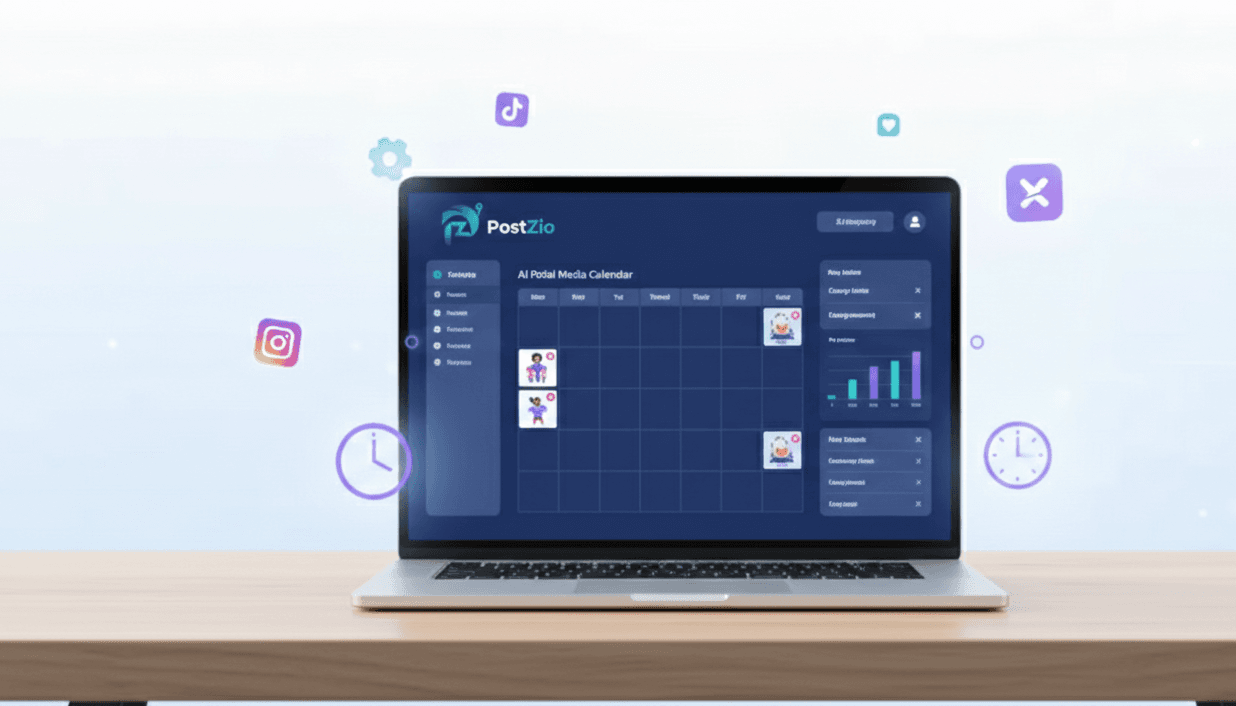
A robust content calendar integration allows drag-and-drop planning, visualizing feeds. Cross-platform scheduling unifies management, auto-adapting formats. Content reuse queues recycle posts, extending value.
AI suggestions predict trends, while security features protect data. Analytics track ROI, guiding refinements.
Look for collaboration tools like comments, enhancing team input. Customizable dashboards provide at-a-glance insights.
Best Times to Post on Social Media in 2026
Optimal times in 2026 center on midweek mornings, Tuesday-Thursday 9 a.m.-1 p.m., for broad engagement spikes up to 24%. Platform data shows Instagram peaking 11 a.m.-5 p.m. Tue-Thu, TikTok evenings 6-9 p.m.
Engagement soars with audience-aligned timing; tools personalize slots, potentially boosting views 18%. Test variations— a food brand found Fridays 10 a.m. ideal for Facebook.
Monitor shifts; weekends suit casual content, but weekdays drive interactions. Use insights from best time to post on LinkedIn for professionals.
Scheduling for Different Social Media Platforms
Tailor scheduling to platforms for max impact. On Instagram, schedule Reels 9-11 a.m. weekdays, using tools for grid previews to hit 3.7% engagement. Facebook favors business posts mid-mornings, with higher clicks Fridays 10 p.m.
LinkedIn thrives 10 a.m.-12 p.m. weekdays for thought leadership. TikTok schedules creatives evenings, amplifying views with shorts.
Leverage tools for auto-adjustments. See best times to post on Facebook for more tips.
Advanced Social Media Scheduling Tips
Post recycling repurposes hits with tweaks, reaching new audiences—AI automates for 49% higher engagement. Content variations adapt formats, like threads from blogs, widening appeal.
Team collaboration via tools streamlines workflows, with 76% of consumers loyal to responsive brands. Integrate AI for predictions.
Experiment with micro-trends; a beauty brand recycled UGC for 30% growth.
Collaborating with Your Team Using Social Media Scheduling Tools
Tools with workflows enable seamless reviews, reducing errors. Shared calendars foster input, perfect for agencies.
Features like notifications keep everyone aligned, boosting efficiency.
Post Scheduling Automation and AI
AI automates creation and timing, with 83% of marketers noting more content output. PostZio's copilot generates optimized schedules, enhancing exposure by 78%.
In 2026, embedded AI shifts focus to creativity, with transparent use building trust.
Advanced Strategies for Scheduling Social Media Posts
Content Recycling and Repurposing
Extend content value by recycling high-performers in your social media post schedule. Repost evergreen content every 3-6 months with updated context. Repurpose top performers into different formats—transform blog posts into Twitter threads, convert Instagram Reels into TikTok videos, and adapt LinkedIn articles into Instagram carousels.
Social media posting scheduler tools like SocialBee automate this process, with brands achieving 49% higher engagement on recycled content. A productivity tips post that gained 500 shares in January can be rescheduled in April with minor caption tweaks for fresh exposure.
Platform-Specific Content Variations
Tailor content for each platform while maintaining a cohesive social media posting schedule. Use the same core message but adapt formats: videos for TikTok, carousels for Instagram, articles for LinkedIn. Optimize aspect ratios—9:16 for Stories/Reels, 1:1 for Instagram feed, 16:9 for YouTube.
A tech startup created one product tutorial and adapted it across platforms: TikTok (60-second tips video), Instagram (carousel with screenshots), LinkedIn (detailed article), and YouTube (full 10-minute tutorial). Result: 30% higher overall engagement.
Team Collaboration
Streamline workflows using collaborative features in apps for scheduling social media posts. Implement approval workflows to prevent errors, use shared content calendars for visibility, enable comment threads for feedback, set role-based permissions, and activate real-time notifications.
Teams using collaborative social media posting schedulers report 76% better content consistency and 45% faster approval times compared to email-based workflows.
AI-Powered Scheduling
Leverage artificial intelligence to optimize your social media posting schedule. Modern AI capabilities include content generation (AI copilots draft captions and suggest hashtags), optimal timing predictions, performance forecasting, automated A/B testing, and trend identification.
PostZio's AI copilot analyzes audience data and suggests precise posting times—like posting Instagram Reels at 11:15 AM instead of 11:00 AM for a 12% view increase. Brands using AI-enhanced social media posting schedule tools report 78% better content exposure and 32% time savings.
Common Mistakes to Avoid
Inconsistent Posting: Sporadic posting confuses algorithms and audiences. Commit to a realistic social media posting schedule you can maintain long-term.
Ignoring Platform Differences: Don't post identical content everywhere. Customize for each platform's format and audience in your social media post schedule.
Neglecting Time Zones: Use schedule social media posts tools that automatically adjust for follower time zones if you have a global audience.
Over-Automation: Balance scheduled posts with real-time engagement. Respond to comments and participate in trending conversations manually.
Skipping Analytics: Review performance data weekly. A social media post schedule without optimization becomes stale quickly.
Conclusion: Transform Your Strategy with a Social Media Posting Schedule
A well-structured social media posting schedule is essential for digital marketing success in 2026. By implementing platform-specific posting frequencies, using the right social media post scheduler, and optimizing with data-driven insights, you can achieve consistent engagement, save valuable time, and maximize ROI.
Start by choosing a social media posting schedule template that fits your business needs, select appropriate apps for scheduling social media posts, and commit to regular optimization. Whether you're using a free social media post scheduler or investing in advanced tools like PostZio, the key is consistency and strategic planning.
Remember that scheduling social media posts is not just about automation it's about building meaningful relationships with your audience. Balance automated posting with real-time engagement, analyze performance regularly, and adapt your posting schedule for social media based on evolving trends and audience behaviors.
Ready to elevate your social media strategy? Implement these frameworks today and watch your engagement soar. Your social media post schedule is the foundation for sustainable digital growth in 2026 and beyond.